CRYSTAL PET ACCESSORIES & MATCHING JEWELLERY · WHOLESALE
Blog / Display & Care
Display & Care · BUYER GUIDE
Displaying and Caring for Gemstone Accessories in Your Store
A store-ready routine for receiving stock, displaying matching pieces, protecting mixed materials and handing over clear care instructions.
Gem & Kin · 14 October 2026
In this guide
- The key insight: care for the complete accessory, not its toughest component.
- Treat the display as part of product care.
- Check and record stock on arrival.
- Set up three clear stock states.
- Make the pairing easy to shop.
- Design labels that answer the first buying questions.
- Manage light, contact and storage.
- Choose a display sample and review it deliberately.
- Use a conservative cleaning routine.
- Prepare packing around the product you approved.
- Give customers a useful handover.
- Keep one care record for each selection.
- Use customer questions to improve the care record.
- Questions about shop display and care.
Buyer takeaway: Care for the whole accessory, including the stones, thread, base and findings. A retailer’s display, storage and cleaning routine should follow the assembled product record, not the hardness or care advice of its most durable stone.
The key insight: care for the complete accessory, not its toughest component.
A mixed-material product is only as suitable for a cleaning or display method as all of its relevant components. A gemstone may tolerate a condition that its thread, finish, base or attachment does not. This is why a retailer needs one care instruction for the assembled piece, supported by the actual construction, rather than a collection of isolated facts about stone hardness.
Think of retail care as a continuous record from receipt to handover. The same style reference should connect the incoming check, display sample, storage location, care card and customer question. This continuity is especially useful when one pairing contains two different forms: an adult bracelet and a pet collar may share beads while requiring different handling and fit advice.
Treat the display as part of product care.
A well-organised display should make a coordinated range easy to understand while protecting stock that will later be sold. Gemstone accessories can contain several stones, thread, a collar base and metal fittings. Plan handling for the complete piece, using its confirmed care instructions rather than a cleaning rule for one bead.
The routine below is a practical starting point for boutiques and lifestyle stores. Adapt it to the approved sample and materials. Packaging shown on this site is a reference option; its format, inclusion and cost need to be confirmed in the quotation.
Check and record stock on arrival.
Open a shipment on a clean, soft surface and compare each item with the packing list. Check the style reference, piece type, size and count before mixing the new delivery with existing stock. Photograph any discrepancy while the original packaging and identifying labels are still available.
Inspect the beads, strand, base, closure and findings without pulling or bending them forcefully. Look for loose components, chipped edges, damaged finishes or a mismatch with the approved sample. Keep questionable pieces aside for review instead of placing them on display.
- Record received quantities by style, piece and size.
- Compare colour and layout with the approved sample under consistent lighting.
- Retain the batch or delivery reference with photographs and documents.
- Report discrepancies with a clear photo and the affected reference.
Set up three clear stock states.
Separate stock that is ready for sale, stock reserved for display or handling, and stock waiting for review. These can be physical trays or clearly labelled locations. The important point is that an unresolved item cannot accidentally return to the sales display because a different team member assumes it was checked.
When a piece needs review, attach the style reference, date, reason and a photograph. Describe the observation concretely: a loose fitting, a chipped bead, an unexpected dimension or a finish that differs from the approved sample. Avoid making a material diagnosis from appearance alone. Send the supplier a concise description and keep the item separate until there is an agreed next step.
This routine is a suggested retail workflow, not a claim that a particular laboratory or formal quality system has inspected the stock. It gives a small shop a practical way to preserve evidence and prevent uncertainty from being passed to a customer.
Make the pairing easy to shop.
Display the collar and adult bracelet together, with enough space that one piece does not obscure the other. Give each a separate label showing its reference, fit information and whether it is priced individually. This prevents a customer from mistaking a paired photograph for a single included set.
For Ember Companions GK-100603, identify the chosen collar size and label the adult bracelet separately. Do not turn the collar’s neck range into a bracelet size. Keep a measurement guide nearby and route any unconfirmed fit question back to the product record.
Use a sample piece for repeated handling where practical, and rotate it out for inspection. Avoid hanging the weight of an accessory from its decorative beaded strand. Choose supports that hold the piece without stretching, crushing or rubbing it against adjacent fittings.
Design labels that answer the first buying questions.
A useful display label identifies the piece, style reference, confirmed fit and whether the displayed items are offered individually. Place the collar’s size information next to the collar and the bracelet’s fit information next to the bracelet. On a paired display, state what the customer is selecting instead of assuming the photograph makes the arrangement obvious.
Keep material wording consistent with the approved product record. A colour-themed display name can be appealing, but it should not replace the identity of the materials where that information has been established. If staff need a fuller explanation, provide a short internal note or a link to the product detail page. Do not add a confident “untreated” or specific metal claim just to make the label sound more premium.
Check the label from the customer’s viewing distance and in the lighting used in your shop. The style name may be prominent while the size and piece distinction remain readable. A QR link can lead to more detail, but the basic buying information should not require a phone.
Manage light, contact and storage.
Store pieces in separate soft compartments or individual protective packing so beads and metal fittings do not rub together. Keep the stock area dry and away from sources of heat. Avoid leaving the same pieces in a hot, brightly sunlit window for long periods.
Durability is more than resistance to scratching. GIA separates hardness, toughness and stability: a material may resist scratches yet still be vulnerable to impact or particular environmental conditions. As one example, GIA notes that some amethyst colour can fade under prolonged intense light in its care guide. Use material-specific guidance for a confirmed stone, and consider every component in a mixed accessory.
Choose a display sample and review it deliberately.
Repeated handling is different from storage. If a piece is used for demonstrations, identify it as the handling sample and inspect it regularly for loosened components, rubbing or changes in appearance. Keep it distinct from untouched stock so its condition is not assumed to match the rest of the delivery.
Use consistent lighting for internal reference photographs and avoid strongly coloured backgrounds that obscure the relationship between the collar and bracelet. Photograph both the paired display and each individual piece. Images used to explain the product should preserve the actual layout and should not erase defects or imply dimensions that are not confirmed.
When an illustration is used to suggest styling, label it as an illustration and keep real product photographs available for selection. A styled or generated wearing image cannot establish fit, construction or material identity. For a wholesale conversation, the customer should always be able to identify the actual piece being quoted.
Use a conservative cleaning routine.
For routine dust, begin with a clean, soft, dry cloth and gentle handling. Keep perfume, shop-cleaning spray and abrasive products away from the pieces. If a stain does not lift, check the product-specific care guidance before trying a liquid cleaner.
Do not assume that advice to wash a loose gemstone applies to its assembled collar or bracelet. Until compatibility is confirmed for the stones, any treatment, thread, base and findings, avoid soaking, steam and ultrasonic cleaning. Care instructions should travel with the complete product record, not just with the name of its most prominent stone.
Prepare packing around the product you approved.
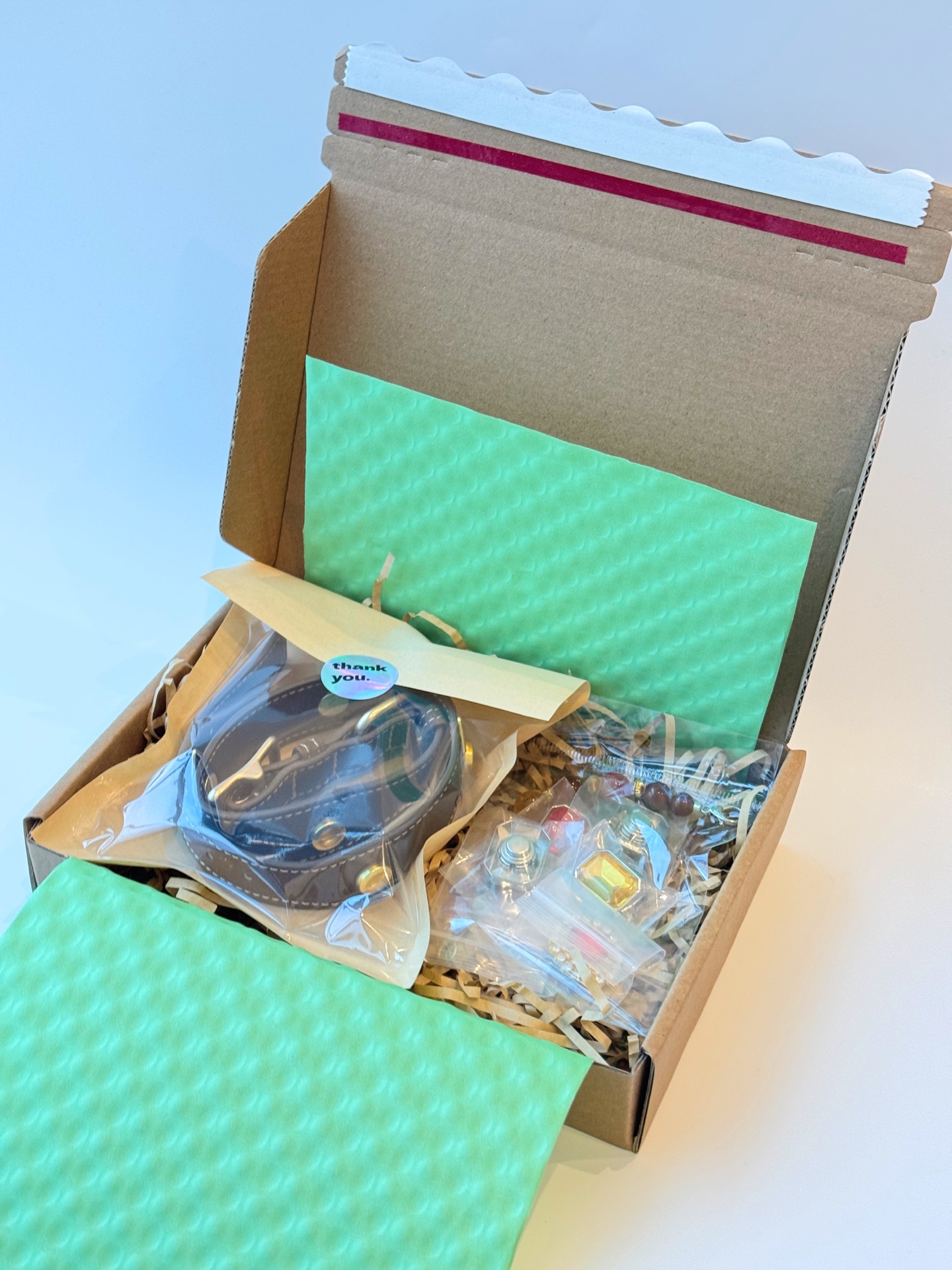
Confirm whether the chosen packing keeps the two pieces separate, whether the beads can rub against metal components and whether the accessory sits without unnecessary bending. Check the actual packed sample instead of choosing solely from a box photograph. Include any label, care card and piece-count requirement in the packing brief.
For owner-and-pet ranges, decide how the pieces will be identified if they are packed separately. The retailer should be able to find the correct collar size and bracelet reference without repeatedly unwrapping every item. Ask about the available packing options and quotation rather than assuming a gift box is included because it appears in an image.
Keep a sample of the approved label wording with the style record. If your store later chooses a different package, review protection, identification and the care information again. A presentation change can affect handling even when the stones and base remain the same.
Give customers a useful handover.
A short care card should identify the style, explain the agreed cleaning and storage method, and tell customers what to do if a component becomes loose. Keep the message practical and consistent with the product page. Do not add unsupported waterproof, hypoallergenic, therapeutic or lifetime-durability claims.
For pet jewellery, explain supervised decorative use and inspection before wearing. Remove it for sleep or rough play, and stop use if the piece is damaged or can be chewed. A decorative beaded strand should not be used as a leash attachment. Confirm the intended function of any separate collar base or hardware rather than inferring it from the photograph.
Keep one care record for each selection.
Put the approved sample photo, care wording, packing choice and latest supplier clarification in the same style record. Use it to brief staff, prepare customer cards and check replenishment. If a material or construction detail changes, review the care instructions before reusing them.
Compare packing options and our Size & Care Guide. In your enquiry, include the style references, intended display format and any care-card or packing requests so the available options can be confirmed.
Use customer questions to improve the care record.
Train staff to distinguish a question they can answer from the approved record from one that needs clarification. “How do I store this?” may have a clear agreed answer. “Is this metal suitable for my particular sensitivity?” should not be answered by guessing from its colour or the word alloy. Record the question and request the missing specification without presenting it as an established fact.
When a customer reports an issue, ask for the style reference, the affected component and a clear photograph. Record when it was noticed and any relevant handling information without assuming the cause. Preserve the description and correspondence so the supplier can review the same evidence. Product-specific return or remedy terms should be handled under the actual agreed terms, not improvised in a general care article.
Questions about shop display and care.
Can all gemstone accessories use the same cleaning method? No. Check the complete material and construction record. A method suitable for one stone may be inappropriate for another component or a treatment. When the assembled piece’s compatibility is unknown, avoid aggressive cleaning and seek clarification.
Does scratch resistance mean an accessory cannot break? No. Hardness concerns scratching; resistance to chipping or breaking is a different property. The way the piece is assembled also matters. Handle the whole accessory gently and inspect it rather than relying on one hardness number.
Should paired products share one care card? They can share a card if it clearly distinguishes instructions for each piece. Keep collar use and fit advice separate from adult bracelet information, and make sure the card matches the actual items supplied.
What should a store request before preparing branded packaging? Confirm the piece dimensions, selected packing format, identification labels, approved care wording and any available customisation. Ask for a sample or other agreed approval evidence before treating a proposed packaging image as the final specification.
WHOLESALE SUPPORT
Turn your notes into a clear enquiry.
Share your shortlist, quantities and destination. Samples, documentation and packing are confirmed for the pieces selected.